ℹ️ Affiliate Disclosure
This page contains affiliate links. ChampsBase may earn a commission if you register or place a bet through these links, at no extra cost to you. Our reviews remain independent and are based on research and real user experience. Learn more on our Affiliate Disclosure page.
Key Takeaways (30 Seconds)
- ✅ 48 teams, 104 matches, 16 venues across the USA, Mexico, and Canada - the largest World Cup ever
- ✅ A brand new round of 32 adds 16 extra knockout matches that did not exist at Qatar 2022
- ✅ Dead rubber group games catch unprepared bettors out - always check squad motivation before betting
- ✅ Mexican venues sit at high altitude, creating a consistent edge on goals markets for informed bettors
- ✅ Africa sends 10 teams, its strongest-ever presence, and is frequently underpriced in group-stage markets
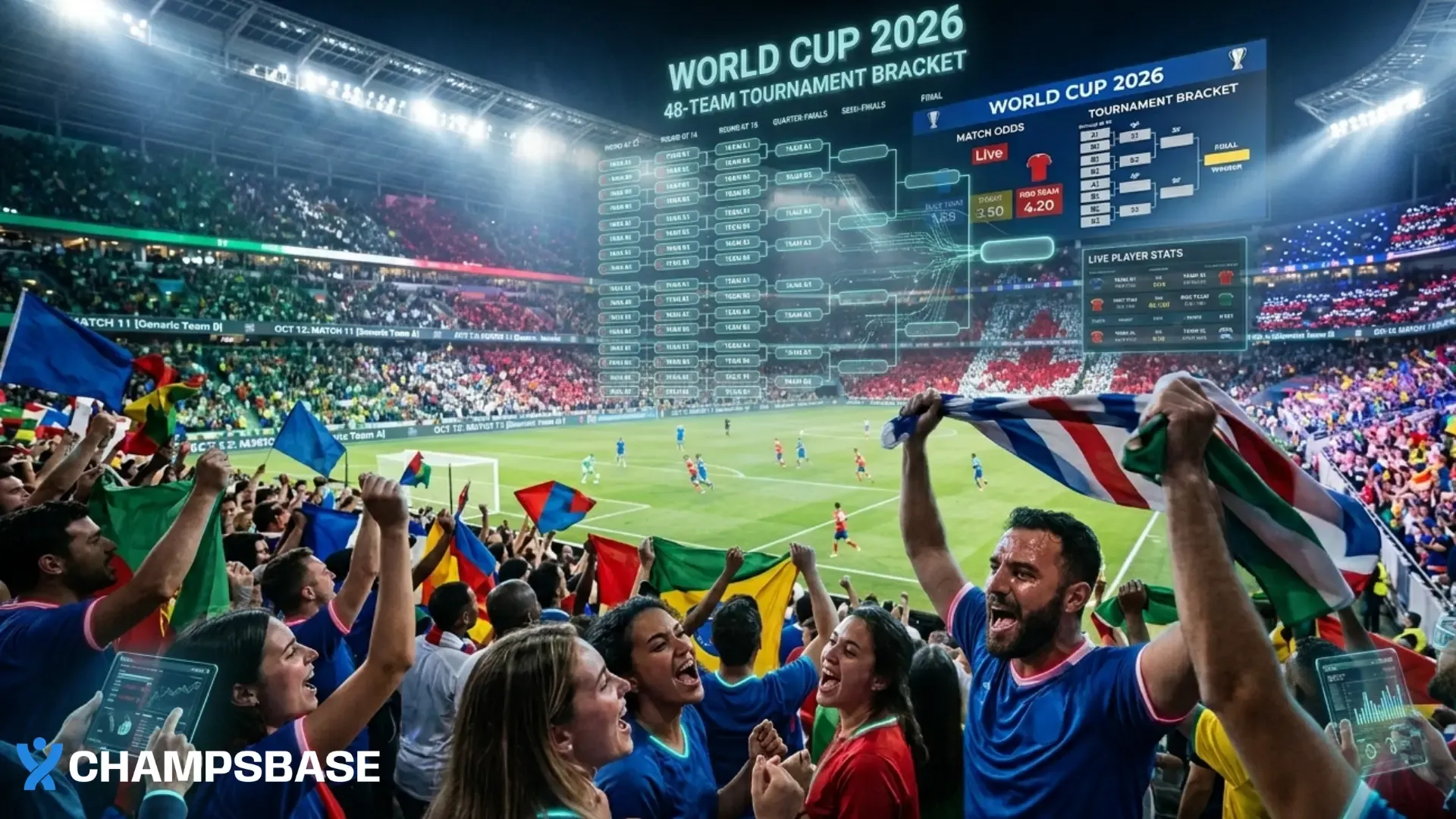
The 2026 Football World Cup is the largest edition of the tournament in the sport's history. It runs from June 11 to July 19 across 16 cities in three countries, features 48 teams and 104 matches, and ends with one nation lifting the trophy at MetLife Stadium in New Jersey.
For anyone looking to bet on the tournament, that scale means more markets, more stages, and more decisions than any previous World Cup.
This page gives you a clear starting point. It covers how the tournament works, where the matches are played, which nations qualified, and which betting markets are available at each stage. Where a specific city or team deserves a closer look, you will find links throughout to take you there.
The 2026 World Cup is the first edition hosted jointly by three nations: the United States, Mexico, and Canada. That shared hosting arrangement affects travel schedules, match conditions, and crowd atmospheres across the tournament. Understanding that context before placing any wager puts you in a stronger position.
What You Need to Know About the 2026 World Cup
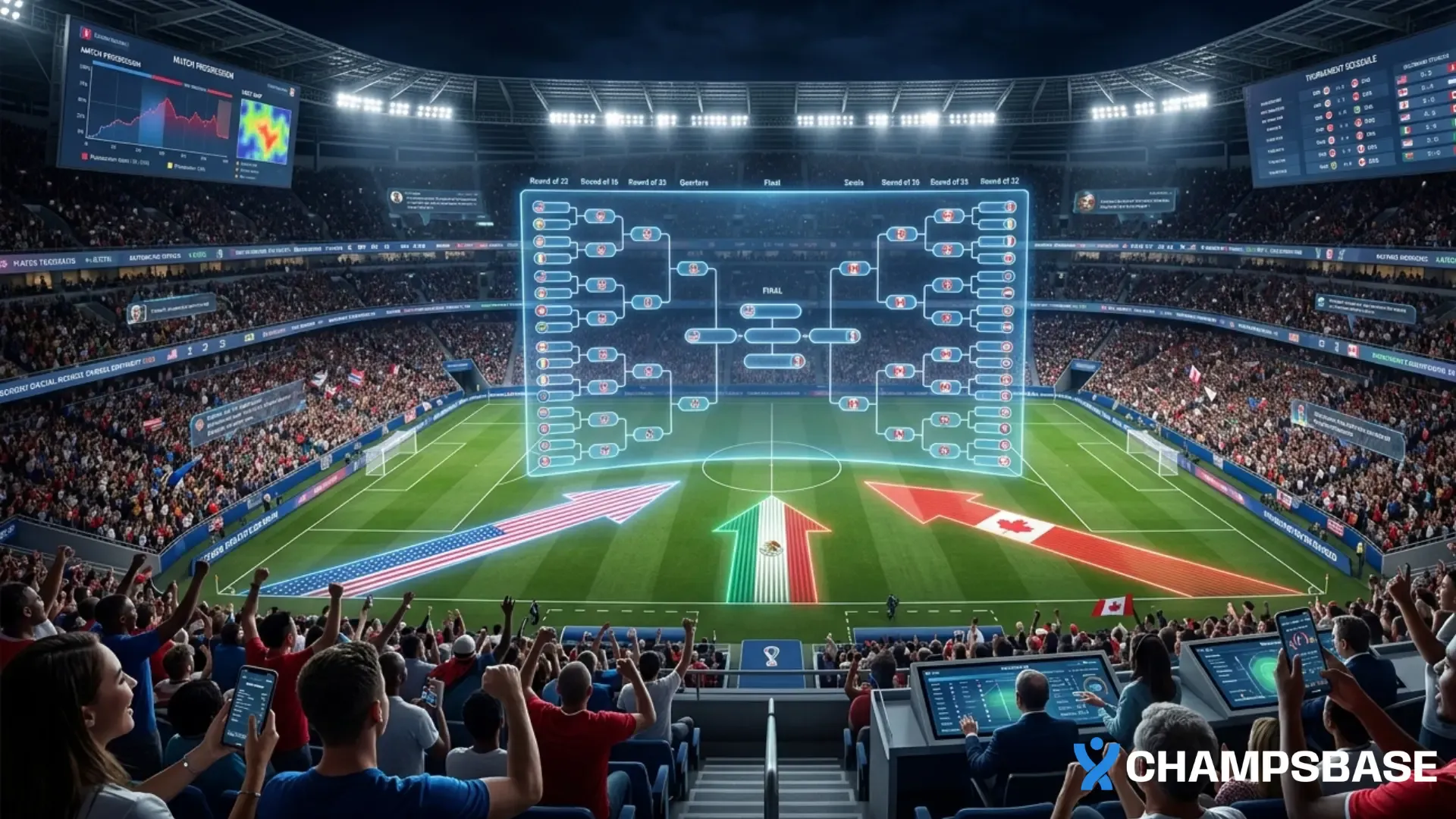
The 2026 World Cup runs from June 11 to July 19, 2026. The United States hosts 11 of the 16 venues, Mexico hosts three, and Canada hosts two. It is the first time three countries have shared hosting duties for the tournament.
The format has changed significantly from the 2022 edition in Qatar. Instead of 32 teams in eight groups, this tournament features 48 teams split into 12 groups of four. A total of 104 matches will be played across all stages, making it the largest World Cup ever staged. The top two teams from each group advance automatically to the knockout rounds.
The eight best third-placed teams across all 12 groups also qualify, producing 32 teams in the knockout bracket. That bracket opens with a round of 32, an additional knockout stage that did not exist in any previous edition of the tournament. The final takes place on July 19 at MetLife Stadium in the New York and New Jersey metropolitan area.
Each of the three host nations is represented by an official mascot: Maple the Moose for Canada, Zayu the Jaguar for Mexico, and Clutch the Bald Eagle for the United States. The official match ball is the Adidas Trionda, designed in red, green, and blue.
For bettors, the expanded format has one practical implication worth understanding before any wager is placed. More matches across more groups means more situations where one or both teams have already secured or lost their chance of qualifying before the final group game.
These dead rubber matches, where motivation is reduced and squads are often rotated, can produce results that pre-match odds do not fully account for.
The 16 Host Cities and Venues Across Three Countries

The 16 venues hosting matches are spread across three countries. Understanding where each game is being played matters for bettors because travel distances, altitude, and crowd composition all affect how matches unfold.
United States (11 Venues)
The United States hosts 11 venues and 78 of the tournament's 104 matches. All games from the quarterfinal stage onward take place on American soil.
- New York/New Jersey: MetLife Stadium (hosts the final on July 19)
- Boston: Gillette Stadium, Foxborough, Massachusetts
- Philadelphia: Lincoln Financial Field
- Atlanta: Mercedes-Benz Stadium
- Miami: Hard Rock Stadium
- Dallas: AT&T Stadium, Arlington, Texas
- Houston: NRG Stadium
- Kansas City: Arrowhead Stadium
- Los Angeles: SoFi Stadium, Inglewood, California
- San Francisco: Levi's Stadium, Santa Clara, California
- Seattle: Lumen Field
Mexico (3 Venues)
Mexico hosts three venues, all carrying significant football history. All three sit at elevation, which has direct consequences for match tempo and physical output, particularly for visiting teams without altitude preparation.
- Mexico City: Estadio Azteca (opens the tournament on June 11; the first stadium to host World Cup matches at three separate editions)
- Guadalajara: Estadio Akron
- Monterrey: Estadio BBVA
Canada (2 Venues)
Canada's two venues host 13 matches across the group stage and knockout rounds.
- Toronto: BMO Field
- Vancouver: BC Place
Why Venue Location Matters for Betting
The geographic spread of this tournament creates betting angles that did not exist in previous single-country editions. Travel fatigue is a real factor when squads move between time zones and coasts. A team playing in Vancouver and then travelling to Miami for its next group match is in a very different preparation position than one playing consecutive games within the same Mexican region.
Altitude is the most specific edge available at Mexican venues. Mexico City's Estadio Azteca sits at approximately 2,240 metres above sea level. Guadalajara and Monterrey are also significantly elevated. Teams without relevant altitude preparation typically produce lower defensive intensity and slower pressing in the early stages of matches at these venues.
Under-goal markets and lower-scoring correct score lines are worth examining for altitude fixtures, particularly when one side arrives better prepared than the other.
Crowd composition also varies by city. Matches in Mexican venues attract strongly partisan atmospheres for Latin American sides. Games at US venues tend to produce a more mixed crowd depending on which teams are involved.
For a closer look at what specific venues mean from a betting angle, we have dedicated pages on 2026 Football World Cup Host Cities.
Who Qualified for the 2026 World Cup
All 48 places have now been confirmed following the completion of both the UEFA playoffs and the inter-confederation playoffs in March 2026. The final team to qualify was Iraq, who beat Bolivia 2-1 in Monterrey on March 31 to secure a spot at the tournament for the first time since 1986.
DR Congo also qualified through the inter-confederation playoff route, defeating Jamaica 1-0, ending a 52-year absence from the tournament. The final breakdown by confederation, including playoff outcomes, is as follows:
- UEFA (Europe): 16 teams - 12 qualified automatically, with Bosnia and Herzegovina, Sweden, Turkey, and Czech Republic claiming the remaining four places through the UEFA playoffs
- CAF (Africa): 10 teams - 9 qualified through the African qualifying rounds, with DR Congo securing the 10th place via the inter-confederation playoff
- AFC (Asia): 9 teams - 8 qualified directly through Asian qualifying, with Iraq claiming the ninth place via the inter-confederation playoff
- CONMEBOL (South America): 6 teams
- CONCACAF (North and Central America and Caribbean): 6 teams, including automatic qualification for the three co-hosts: the United States, Canada, and Mexico
- OFC (Oceania): 1 team - New Zealand, who secured the confederation's first-ever guaranteed direct slot at the tournament
Among the qualified nations, Argentina arrive as defending champions after winning the 2022 World Cup in Qatar. Brazil, France, Germany, England, and Spain all qualified and appear consistently at the top of early outright betting markets. The automatic qualification of the United States, Canada, and Mexico gives all three host nations a guaranteed stage in what is, for each of them, a home tournament.
The broader field brings a wider range of playing styles than previous editions. Africa's ten representatives mark the confederation's strongest-ever presence at a World Cup, and several of those squads are now built largely around players with extensive experience at top European clubs.
The same is true for several of Asia's nine representatives. Bookmakers sometimes price group-stage markets for African and Asian nations based on historical World Cup results that no longer accurately reflect how those squads are currently built. That gap is worth examining when group betting markets open.
For team-specific betting breakdowns, we have dedicated pages on England, Scotland, USA, Canada, Ghana, and South Africa. For predictions and tips covering the broader field, see our 2026 Football World Cup betting tips page.
The Main Betting Markets for the 2026 World Cup
The markets available for a World Cup follow a broadly consistent structure across licensed bookmakers. What changes in 2026 is the number of stages across which those markets apply and a few format-specific wrinkles that are new to this edition. Below is a plain-language breakdown of what each market involves and when it tends to offer the most value.
Outright Winner
This is a bet on which team lifts the trophy on July 19. The appeal is the long prices available on nations outside the traditional favourites, particularly in a 48-team field where surprises are more likely in the group stage. The historical record, however, is consistent: every World Cup since 1978 has been won by a nation from Europe or South America.
Strong fancies tend to be priced better before the tournament starts than after the group stage, when odds on the leading sides shorten quickly once early form is visible.
Group Winner
Backing a team to finish top of their group carries lower risk than an outright bet and is generally easier to assess based on squad quality and draw composition. The key check before betting on any group winner is whether a team's final group game is one they will approach at full strength, or whether qualification will already be confirmed and rotation is likely.
Top Goalscorer (Golden Boot)
This market is harder to call in the expanded format. Strikers from stronger nations may sit out dead rubber group games or be substituted early once their side has qualified. Attackers playing for nations in tightly contested groups, where every result matters, often accumulate goals at a better rate than pre-tournament odds reflect.
Round of 32 and Match Betting
The round of 32 is specific to the 2026 format and did not exist at Qatar 2022. It creates 16 additional knockout matches and a full extra stage of betting opportunities. Most fixtures at this stage will pair higher-ranked sides against weaker nations, so the favourites are often identifiable.
The more useful question is which favoured teams arrive in that round in better physical condition, having topped their group with purpose rather than scraped through as a third-placed qualifier.
Both Teams to Score and Correct Score
Both teams to score asks only whether each side nets at least once in the match. It tends to produce more activity in the group stage, when teams are playing with more urgency before qualification is settled. Correct score betting carries the highest risk of any standard match market.
It works best when applied selectively to fixtures where you have a well-reasoned read on the likely pattern of play, rather than as a general approach across the tournament.
Ante-Post and In-Play
Ante-post means betting before the tournament begins or before a specific match. Prices are generally longer at this point, which makes it the better time to back strong fancies on outright markets.
In-play betting takes place during the match itself, giving you more information on how the game is developing, though at shorter odds. A tournament that runs for five weeks gives you ample time to use both approaches across different stages.
Record Prize Money at the 2026 World Cup

The total prize fund for the 2026 World Cup is $727 million, approximately 50 percent higher than the 2022 edition in Qatar. The winning nation receives $50 million. The runner-up takes home $33 million. Every qualified team is guaranteed at least $10.5 million, which includes $1.5 million allocated for pre-tournament preparation costs.
The size of that fund reflects how commercially significant this edition has become. For bettors, the practical effect is that fewer nations will approach this tournament without genuine preparation behind them. Higher financial returns at every stage give teams across the full field a strong incentive to compete, not just qualify.
Important Dates for 2026 World Cup Bettors
The tournament opens on June 11 with Mexico playing South Africa at Estadio Azteca in Mexico City. The group stage runs from that date through the end of June, with matches spread across all three host countries.
The round of 32, the first knockout stage, begins in late June. This is the point where attention tends to shift from tournament-level outright bets toward individual match markets. The round of 16 follows in early July, then the quarterfinals and semifinals in quick succession as the field narrows.
The third-place match takes place on July 18, and the final is on July 19 at MetLife Stadium.
Knowing this timeline has practical value for betting decisions. Odds shift after every round, and a position taken before the tournament can look very different in value by the time the quarterfinals arrive.
Understanding when each stage begins helps you decide when to act, when to hold, and when a market has already moved too far. For ongoing schedule updates and match-by-match news, see our Football World Cup news page.
⚠️ Bet Responsibly
The 2026 World Cup runs for five weeks with matches on most days. It is easy to spend beyond your limit without noticing. Before placing your first bet, commit to these:
- ✅ Set a total budget before the tournament starts and stick to it
- ✅ Never increase your stakes to chase a loss
- ✅ Use deposit limits and cooling-off tools on your account
- ✅ Step away if betting stops feeling enjoyable
- ✅ Self-exclusion is available at any point — use it if you need it
For further guidance and support, visit our responsible gaming page.



